
Opens in a new tab

Trigger Point Therapy to Relieve Pain and Restore Movement

Bob Tricomi
on
September 22, 2025

When pain just won’t let go

Ever had a knot in your back or shoulder that feels like it’s in charge of your whole day? No matter how much you stretch, roll, or press into it, it just won’t budge. You go to bed hoping it’ll ease up overnight, only to wake up and realize… nope. Still there.

That’s what we call a trigger point—a small, tight spot in your muscle and fascia that can keep sending pain signals long after the original strain or stress has passed. And the tricky part? The pain doesn’t always show up where the knot actually is. That knot in your shoulder? It might be the reason your head is pounding. The one in your hip? It could be making your knee ache.

In our Lexington practice, we see these kinds of stubborn knots all the time — and trigger point therapy is one of the best ways to get them to finally let go.

Illustration of upper back muscles with common trigger points marked on the trapezius, levator scapulae, and rhomboid muscles.

What are trigger points?

Think of them as stubborn roadblocks in your muscles or fascia. They pop up from overuse, stress, poor posture, or old injuries – sometimes from scar tissue that leaves the fascia bound up or tight. Instead of letting your muscles slide and move the way they should, they clamp down. And once they do, your body starts working around them—compensating, tightening elsewhere, creating that frustrating “why does this hurt when I didn’t even injure it?” feeling.

Some of the most common issues we see in our clients include shoulder pain, tension headaches, and lower back stiffness — all often tied back to hidden trigger points.

Why we focus on fascia

At Bodywork Masters, our fascia-first approach means we don’t just chase the pain. Fascia is the connective tissue that runs through everything in your body. When a trigger point locks up, it doesn’t just sit in isolation. It pulls on the fascia around it, which in turn tugs on other muscles and joints. That’s why treating only the sore spot rarely works — the true source is usually somewhere else.
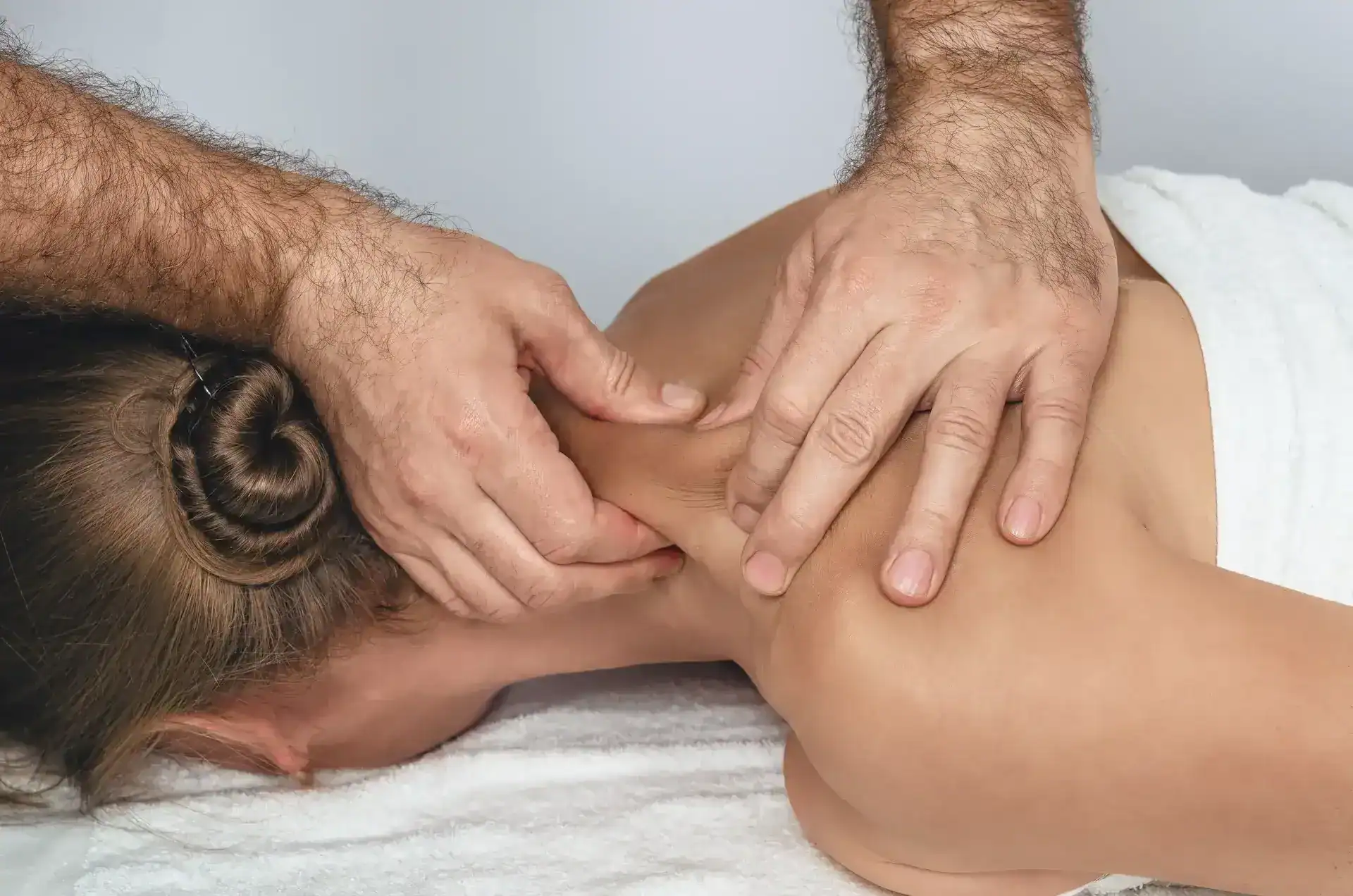
Close-up of bodyworker applying trigger point pressure to the neck and shoulder area of a client.

How trigger point release works

Here’s how we approach it at our studio. Instead of digging straight into a sore muscle, we warm the fascia first with therapeutic heat and specialized tools. Once the tissue is pliable, we use steady, focused pressure on the trigger point. In many cases, what feels like a knot is actually fascia that’s gotten stuck and needs help to release.

Sometimes that’s enough. Other times, we bring in techniques like myofascial release, assisted stretching, gua sha, or cupping. The goal is always the same: help your body let go of tension and move more freely.

What a session feels like

Trigger point therapy can be a little tender — most people describe it as that “hurts so good” feeling. But as the knot begins to release, there’s usually a sense of lightness and relief. Movements that felt stiff a moment ago suddenly feel easier.

A session often follows a rhythm: warm the fascia, locate the trigger point, apply pressure until the muscle or tight fascia softens, then recheck your range of motion.

Woman pressing her temples with a pained expression, showing discomfort from headache that may be linked to neck or shoulder trigger points.

When trigger point therapy is most useful

Trigger point therapy is especially helpful for:

  • Headaches or jaw pain tied to neck and shoulder tension
  • Frozen shoulder or stubborn shoulder stiffness
  • Lower back or hip pain that keeps coming back
  • Leg pain caused by deep muscle knots in the glutes or hamstrings
  • Scar tissue after surgery or injury that makes tissue feel stuck

Clients often come in with these exact challenges — and see results when trigger point therapy is combined with fascia work, heat, and stretching.

Trigger point therapy for headaches, shoulder and back pain

We’ve had clients walk in with headaches that eased after releasing a knot in the neck. Shoulder pain often improves once hidden trigger points in the upper back are treated. And runners often regain hip mobility once deep trigger points are released.

That’s the power of this work: when you stop chasing pain and start treating its root causes, your body responds.

Smiling man walking outdoors, showing ease and freedom of movement after relief from shoulder pain with trigger point therapy.

Ready to feel the difference?

Trigger points don’t have to keep running the show. When they’re released as part of a fascia-first session, your body can reset — movement feels smoother, tension eases, and pain no longer calls the shots.

If you’re in or around Lexington, MA and dealing with pain that just won’t go away, our trigger point therapy sessions can help your body finally let go.


Bob Tricomi

Bob is the creator of the Tricomi Method®, a fascia-focused approach using heat and tools to release pain quickly and effectively. He works hands-on with clients and trains massage professionals through the Bodywork Masters Training Program.

Trigger Point Therapy to Relieve Pain and Restore Movement

Man outdoors holding shoulder in pain, showing discomfort from muscle knot or trigger point.

When pain just won’t let go

Ever had a knot in your back or shoulder that feels like it’s in charge of your whole day? No matter how much you stretch, roll, or press into it, it just won’t budge. You go to bed hoping it’ll ease up overnight, only to wake up and realize… nope. Still there.

That’s what we call a trigger point—a small, tight spot in your muscle and fascia that can keep sending pain signals long after the original strain or stress has passed. And the tricky part? The pain doesn’t always show up where the knot actually is. That knot in your shoulder? It might be the reason your head is pounding. The one in your hip? It could be making your knee ache.

In our Lexington practice, we see these kinds of stubborn knots all the time — and trigger point therapy is one of the best ways to get them to finally let go.

Illustration of upper back muscles with common trigger points marked on the trapezius, levator scapulae, and rhomboid muscles.

What are trigger points?

Think of them as stubborn roadblocks in your muscles or fascia. They pop up from overuse, stress, poor posture, or old injuries – sometimes from scar tissue that leaves the fascia bound up or tight. Instead of letting your muscles slide and move the way they should, they clamp down. And once they do, your body starts working around them—compensating, tightening elsewhere, creating that frustrating “why does this hurt when I didn’t even injure it?” feeling.

Some of the most common issues we see in our clients include shoulder pain, tension headaches, and lower back stiffness — all often tied back to hidden trigger points.

Why we focus on fascia

At Bodywork Masters, our fascia-first approach means we don’t just chase the pain. Fascia is the connective tissue that runs through everything in your body. When a trigger point locks up, it doesn’t just sit in isolation. It pulls on the fascia around it, which in turn tugs on other muscles and joints. That’s why treating only the sore spot rarely works — the true source is usually somewhere else.

Close-up of bodyworker applying trigger point pressure to the neck and shoulder area of a client.

How trigger point release works

Here’s how we approach it at our studio. Instead of digging straight into a sore muscle, we warm the fascia first with therapeutic heat and specialized tools. Once the tissue is pliable, we use steady, focused pressure on the trigger point. In many cases, what feels like a knot is actually fascia that’s gotten stuck and needs help to release.

Sometimes that’s enough. Other times, we bring in techniques like myofascial release, assisted stretching, gua sha, or cupping. The goal is always the same: help your body let go of tension and move more freely.

What a session feels like

Trigger point therapy can be a little tender — most people describe it as that “hurts so good” feeling. But as the knot begins to release, there’s usually a sense of lightness and relief. Movements that felt stiff a moment ago suddenly feel easier.

A session often follows a rhythm: warm the fascia, locate the trigger point, apply pressure until the muscle or tight fascia softens, then recheck your range of motion.

Woman pressing her temples with a pained expression, showing discomfort from headache that may be linked to neck or shoulder trigger points.

When trigger point therapy is most useful

Trigger point therapy is especially helpful for:

  • Headaches or jaw pain tied to neck and shoulder tension
  • Frozen shoulder or stubborn shoulder stiffness
  • Lower back or hip pain that keeps coming back
  • Leg pain caused by deep muscle knots in the glutes or hamstrings
  • Scar tissue after surgery or injury that makes tissue feel stuck

Clients often come in with these exact challenges — and see results when trigger point therapy is combined with fascia work, heat, and stretching.

Trigger point therapy for headaches, shoulder and back pain

We’ve had clients walk in with headaches that eased after releasing a knot in the neck. Shoulder pain often improves once hidden trigger points in the upper back are treated. And runners often regain hip mobility once deep trigger points are released.

That’s the power of this work: when you stop chasing pain and start treating its root causes, your body responds.

Smiling man walking outdoors, showing ease and freedom of movement after relief from shoulder pain with trigger point therapy.

Ready to feel the difference?

Trigger points don’t have to keep running the show. When they’re released as part of a fascia-first session, your body can reset — movement feels smoother, tension eases, and pain no longer calls the shots.

If you’re in or around Lexington, MA and dealing with pain that just won’t go away, our trigger point therapy sessions can help your body finally let go.