Bob Tricomi
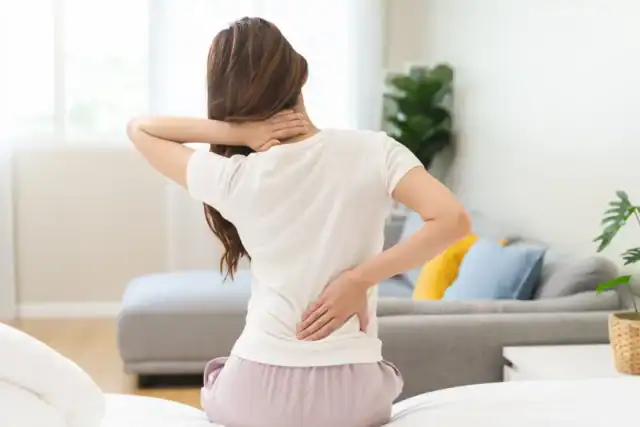
You know that feeling when your lower back is screaming at you, making it impossible to find a comfortable position? When you catch a glimpse of your profile in a mirror and notice your belly seems to stick out more than it should, no matter how many crunches you do? If this sounds familiar, you might be dealing with lordosis – an excessive inward curve of your lower back that can make everyday activities feel like an uphill battle.
As a bodywork therapist working with spinal conditions, I’ve seen how lordosis can hold people back from living their best lives. My clients tell me about avoiding activities they once loved, struggling through workdays, and feeling frustrated with constant discomfort. The good news? With the right approach, you can find relief and get back to doing what you love.
Understanding Lordosis
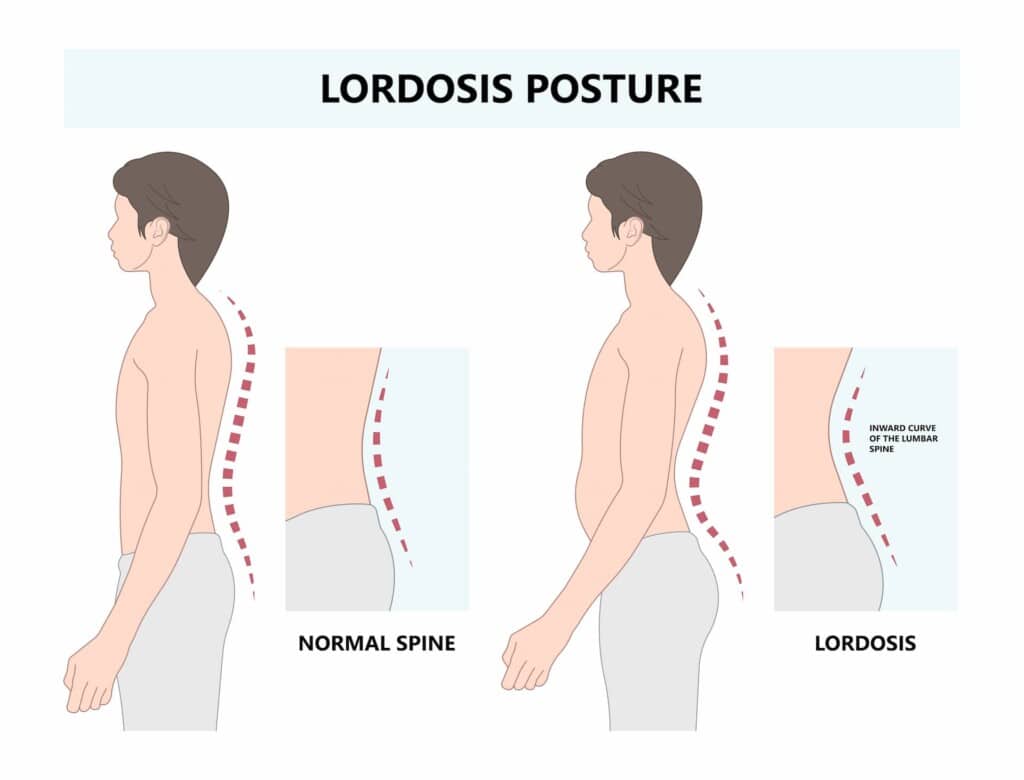
Think of your spine like a spring that’s been stretched too far in one spot. When you have lordosis, that natural curve in your lower back becomes more pronounced than it should be – kind of like a “C” shape when you look at it from the side. This extra curve makes your belly stick out and your buttocks appear more prominent, which is why some people call it “swayback.”
But lordosis isn’t just about how you look – it changes how your whole body works:
- Your pelvis tips forward, like a bowl of water tipping to spill out the front
- Your lower back muscles get short and tight
- Your belly muscles become stretched and weak
- Your whole center of balance shifts, making movement harder
You might notice:
- A deep ache in your lower back that gets worse as the day goes on
- Trouble finding a comfortable way to sit or stand
- Feeling like you can’t “stand up straight” even when you try
- Hip pain that seems to move around
- Tired back and core muscles
- Tight, painful hamstrings
- Sometimes numbness or tingling down your legs
- That frustrating feeling that your posture is “off” but you can’t fix it
What Causes Lordosis?
I’ve seen lordosis develop from various situations:
- Hours spent at a desk job (like my client Tom, who developed it after 10 years in tech)
- Pregnancy and postpartum changes
- Carrying extra weight around the midsection
- Genetic factors
- Previous injuries
- Compensation for other conditions like flat feet or knee problems
How Bodywork Therapy Makes a Real Difference
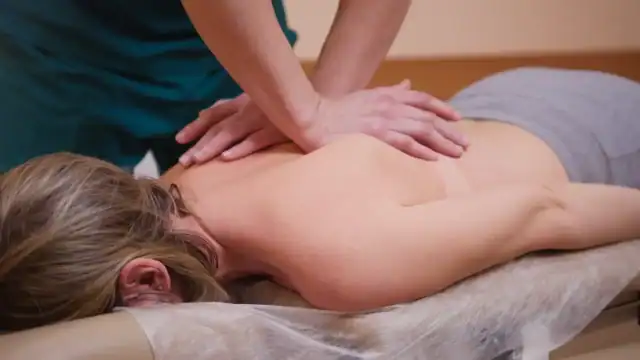
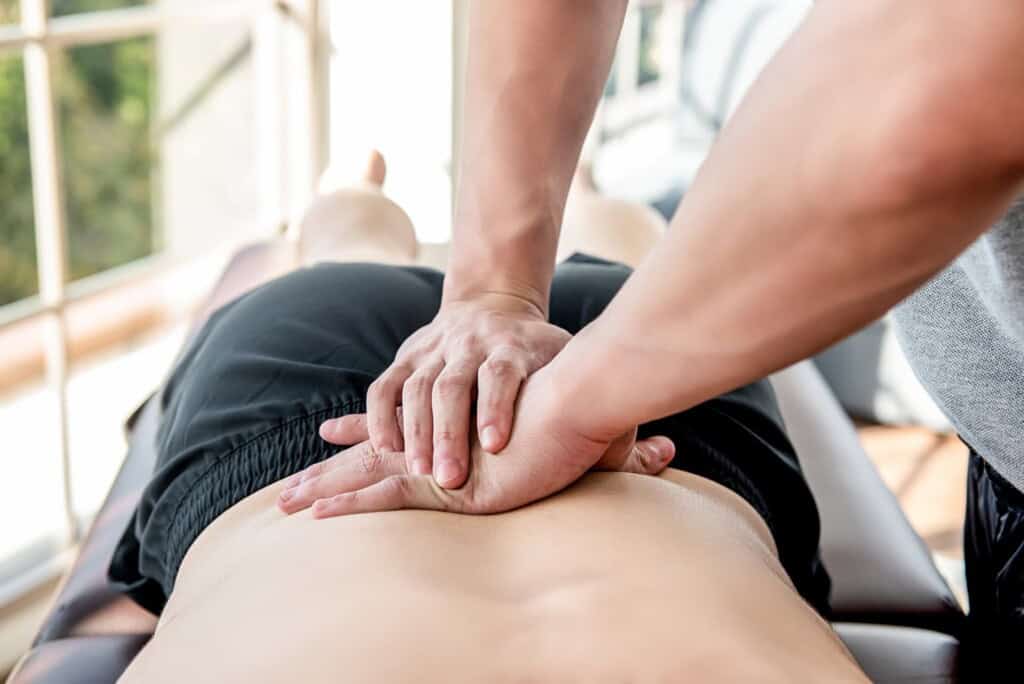
At Bodywork Masters, we use three main techniques that work together to help your body find relief and better alignment:
Specific Techniques That Get Results
Myofascial Release
Think of your fascia as a sweater that wraps around your muscles, ribs, sacrum, and glutes. When it gets bunched up or twisted in spots, it pulls everything else along with it. Through gentle but firm pressure that we hold just long enough, we help smooth out these tight areas, especially around your lower back and hips.
This technique helps your body let go of old holding patterns by working on adhesions in areas like your ribs, lower back, glutes, and piriformis. These tight areas often contribute to that excessive curve in your back. Many of my clients tell me that after we free up these stuck spots, they feel taller and lighter, and can move more easily in their everyday activities.
Trigger Point Therapy
You know those spots in your back that feel like knots? Those are trigger points, and they can keep your muscles locked in patterns that make lordosis worse.
We find these tender spots in your lower back, hip flexors, and other areas, and help them release. It’s like untying tiny knots that have been pulling your spine out of place.
Assisted Stretching
After all the adhesions are released, this is where we help your body remember how it should move. With careful guidance, we’ll help stretch:
- Tight hip muscles that pull your pelvis forward
- Short, cramped lower back muscles
- Tight hamstrings that affect your posture Many clients say this feels like a combination of a stretch and a massage, and it helps their body feel more balanced.
How These Techniques Work Together to Help You
When we combine these techniques, your body experiences several benefits:
Releasing Tension Patterns
- Your tight muscles begin to soften and lengthen
- Your hip flexors release their forward pull
- The excessive curve in your spine starts to ease
Restoring Balance
- Weak core muscles wake up and engage better
- The muscle groups around your pelvis work together more effectively
- Your back and abdominal muscles learn to coordinate again
Creating Lasting Change
- Your body learns healthier movement patterns
- You develop better posture habits naturally
- The improvements stick around longer
Living Better with Lordosis
Success in managing lordosis comes from a combination of professional treatment and daily habits. Here’s what works:
At Work
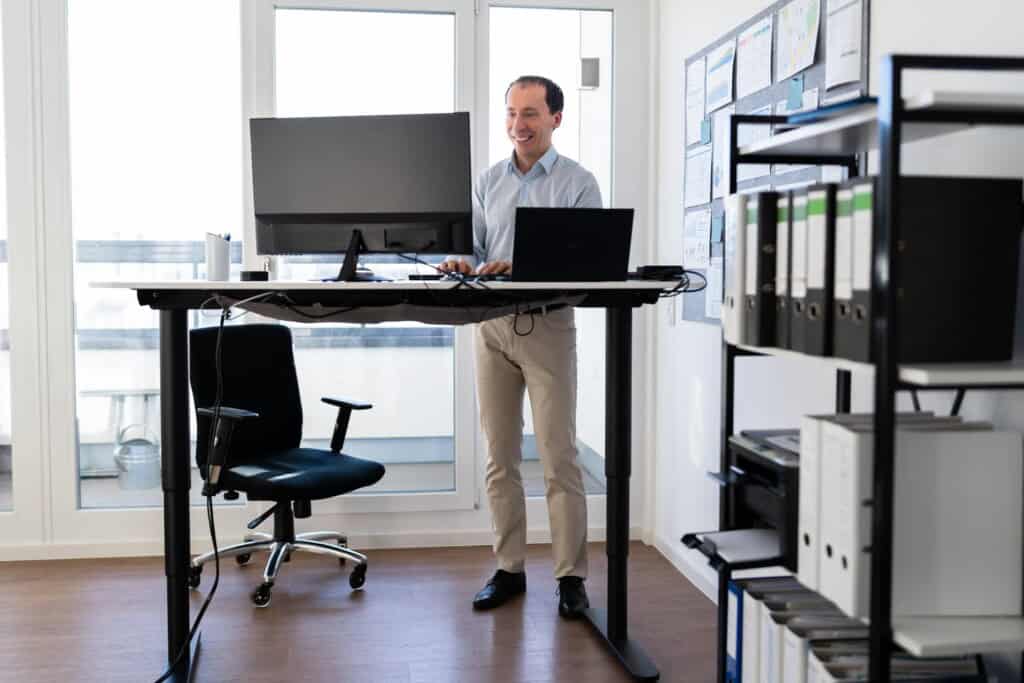
- Using a standing desk with proper ergonomic setup
- Taking regular movement breaks
- Using a lumbar roll for seated support
- Practicing “micro-movements” throughout the day
At Home
- Sleeping with proper pillow support
- Using a firm mattress
- Setting up an ergonomic home office
- Creating an exercise routine that doesn’t aggravate symptoms
- Regular stretching and strengthening exercises
- Stress management techniques
During Activities
- Learning proper lifting techniques
- Modifying exercise routines
- Using supportive footwear
- Practicing mindful movement
Special Considerations for Different Life Stages
During Pregnancy
Pregnancy often exacerbates lordosis, but gentle bodywork can help manage symptoms by:
- Supporting the changing center of gravity
- Relieving pressure on the lower back
- Preparing the body for delivery
For Athletes
Athletes need specific approaches that:
- Support high-performance activities
- Prevent injury during training
- Maintain flexibility while building strength
For Office Workers
Desk workers benefit from techniques that:
- Counter long periods of sitting
- Address upper body tension
- Improve workplace ergonomics
What to Expect on Your Journey
Everyone’s path to improvement is unique, but here’s what you can typically expect:
Initial Phase (1-3 sessions)
- Decreased pain and tension
- Better awareness of posture
- Initial improvement in mobility
Building Phase (4-8 sessions)
- Noticeable posture improvements
- Increased strength and flexibility
- Better movement patterns
Maintenance Phase
- Regular check-ins to maintain progress
- Self-care routine refinement
- Ongoing postural awareness
- Prevention of recurring issues

Taking the Next Step
Lordosis doesn’t have to control your life. Through bodywork therapy, you can develop better body awareness, reduce pain, and improve your overall quality of life. I’ve seen countless clients transform their relationship with their bodies through consistent bodywork therapy. While everyone’s journey is different, the path to feeling better is available to all.
Ready to start feeling better? At Bodywork Masters, we specialize in helping people just like you find relief from lordosis and get back to living life fully. Schedule a session today to begin your journey to better posture and pain-free living starts here.