Bob Tricomi
That persistent ache in your chest wall, right where your ribs meet your breastbone – if you’re dealing with this kind of pain, you might have costochondritis, also known as chest wall inflammation or rib joint inflammation.
As a bodywork therapist, I see many clients who’ve been dealing with this uncomfortable condition, often feeling frustrated because they’re not sure what’s causing it or how to find relief.
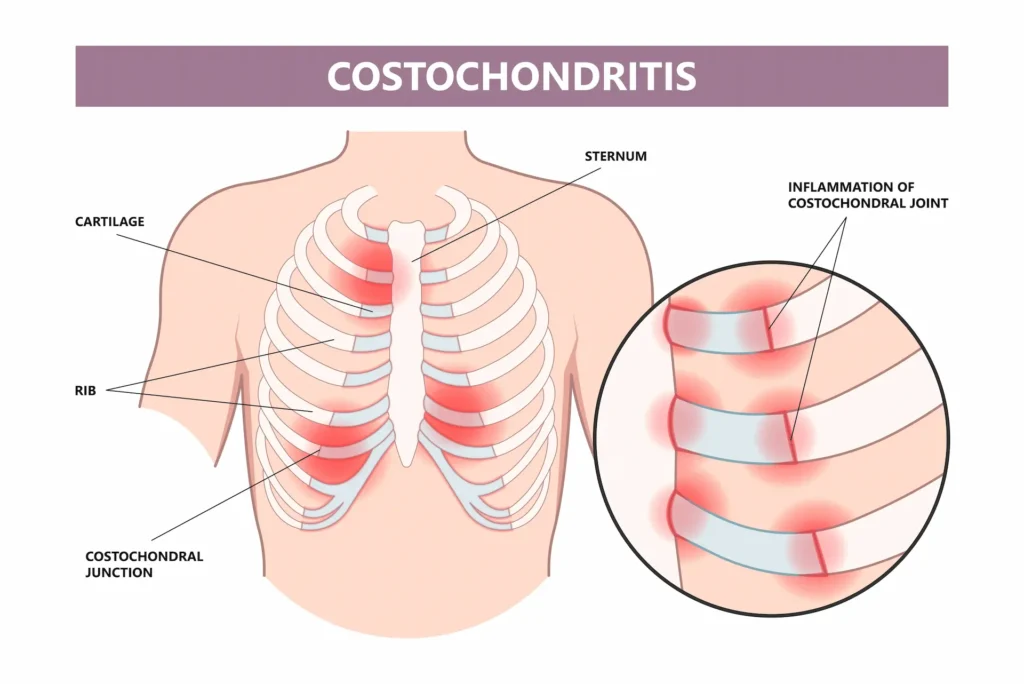
What is Costochronditis?
Costochondritis happens when the cartilage connecting your ribs to your breastbone becomes inflamed. While it can be quite painful and concerning, it’s not dangerous or life-threatening, though you should always get checked by a doctor to rule out other conditions.
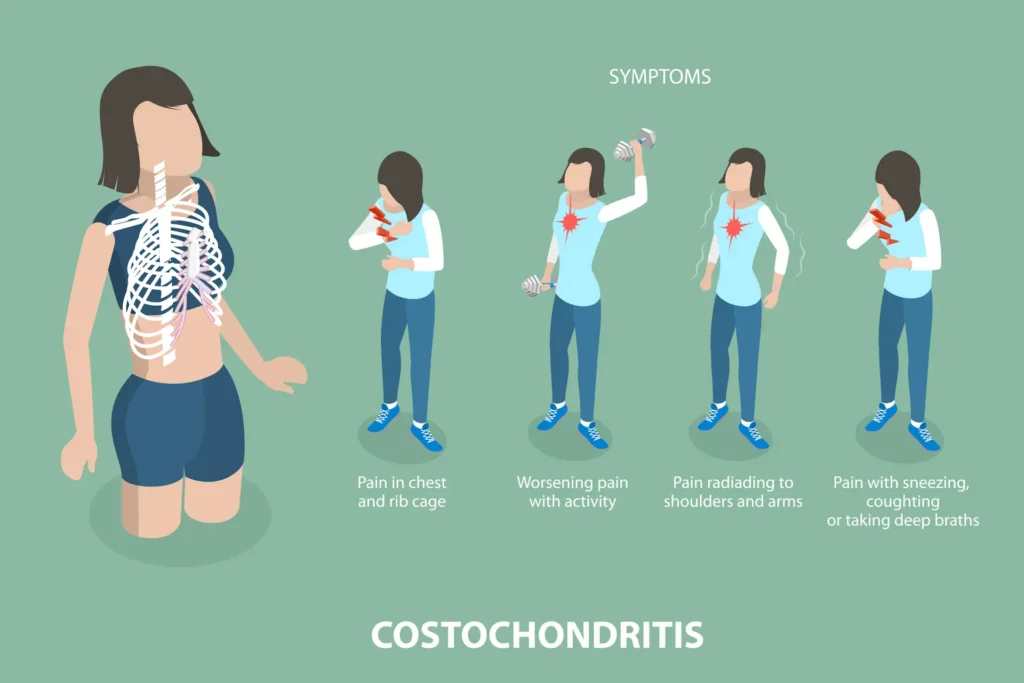
Understanding Chest Wall Pain: Symptoms and Causes
Costochondritis typically shows up as:
- Sharp or dull pain at the front of your chest, especially where your ribs connect to your breastbone
- Tenderness when touching or pressing on your chest
- Pain that gets worse with deep breathing, coughing, or certain movements
- Discomfort that might mimic heart-related pain (always get checked by a doctor first!)
- Pain that can radiate to your back or abdomen
Common causes include:
- Repetitive strain from exercise or daily activities
- Poor posture, especially from desk work
- Physical trauma or injury
- Heavy lifting or sudden movements
- Frequent coughing
- Viral infections
- Stress and tension
How Bodywork Can Help Your Chest Pain
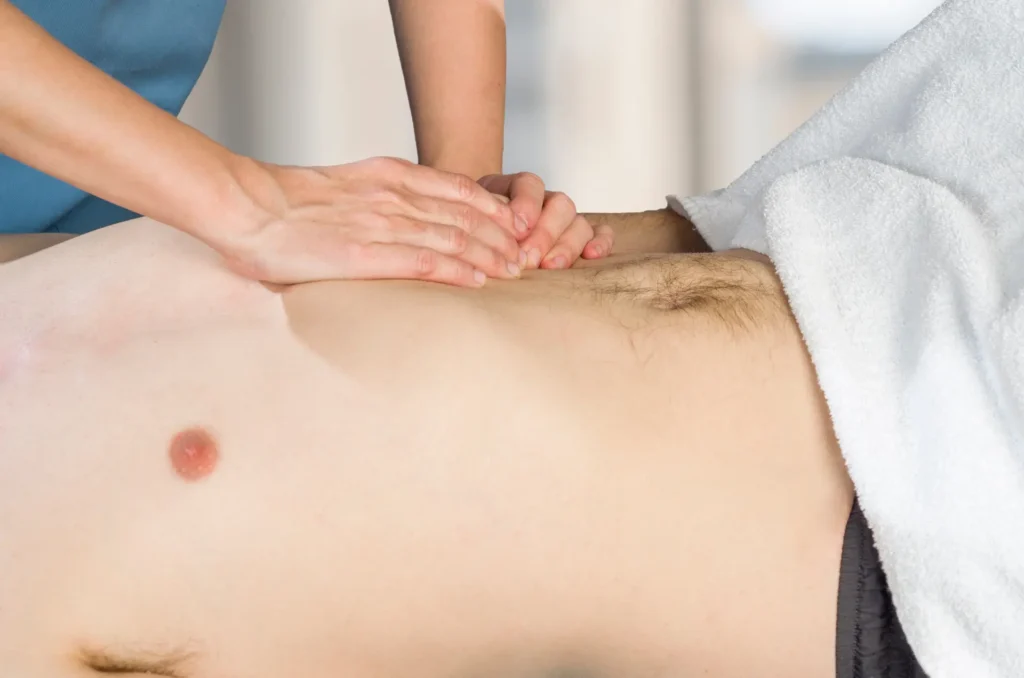
When you’re dealing with chest wall inflammation, the right kind of hands-on therapy can make a world of difference. Bodywork helps by:
- Reducing inflammation in the affected areas
- Releasing tension in the surrounding muscles and fascia
- Improving mobility in your rib joints
- Enhancing blood flow to promote healing
- Addressing postural issues that might be contributing to your pain
Think of it like this: if your chest wall is a door that’s stuck, bodywork helps oil the hinges and realign the frame, making everything work smoothly again. Let’s explore the specific techniques we use to achieve these results.
The Bodywork Techniques That Actually Make a Difference
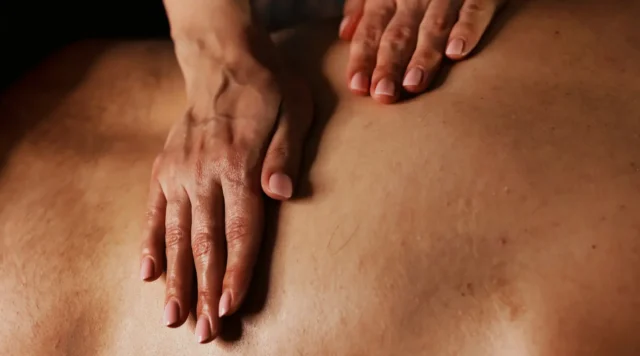
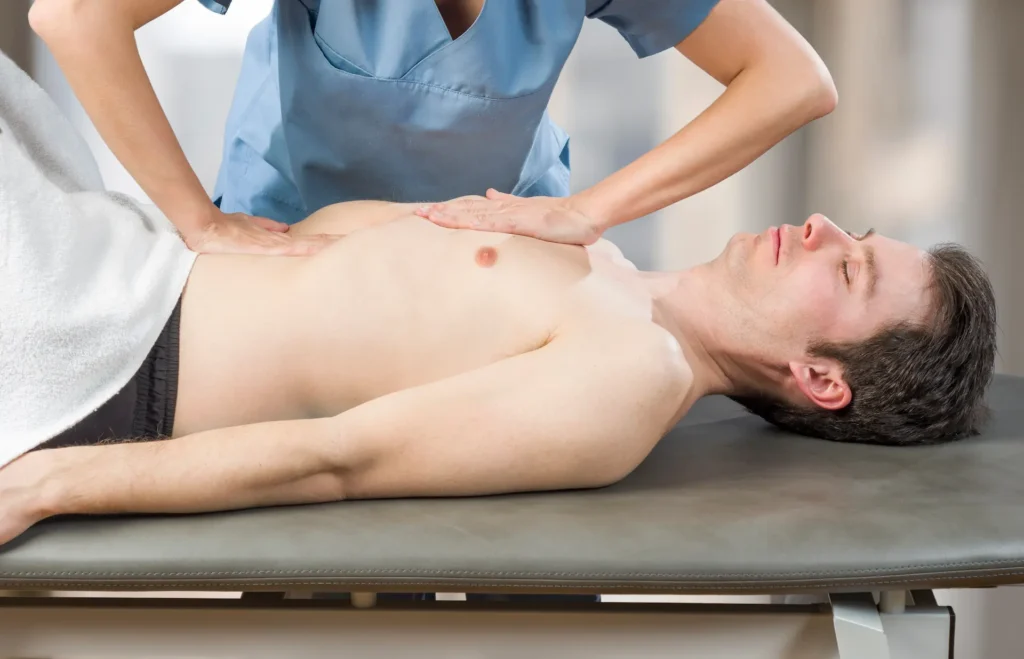
Myofascial Release: Gentle but Effective Relief
Think of your chest muscles and tissue like a tight sweater that needs gentle stretching. We use soft, steady pressure to help everything relax and move better. Here’s why it’s often our first approach:
- Reduces stiffness in your chest
- Loosens tight muscles around your ribs
- Helps you breathe more easily
- Makes movement more comfortable
I had a client, Lisa, who described her chest pain as “wearing a shirt that’s two sizes too small.” After a few myofascial release sessions, she finally felt like she could take a full breath again.
Trigger Point Therapy: Finding and Fixing Pain Spots
You know those tender spots that hurt when you press them? Those are trigger points – tight knots in your muscles that can cause pain. We focus on:
- The small chest muscles that others often miss
- The muscles between your ribs
- The muscles along your sides
- Sore spots where your ribs meet your breastbone
Cupping Therapy: Modern Relief for Stubborn Pain
While it might look strange, cupping is great for chest pain. It’s like a gentle vacuum that:
- Lifts and releases tight tissue
- Brings fresh blood to sore areas
- Can move along painful spots
- Helps without pressing on tender areas
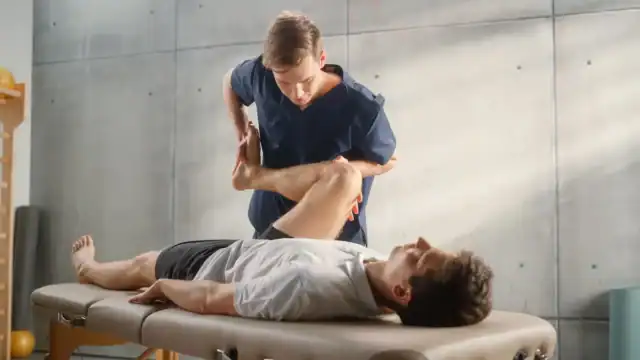
Joint Therapy: Restoring Normal Movement
This gentle approach helps your ribs move more freely. We work on:
- Easy movements for your rib joints
- The area around your collarbone
- Ways to breathe more comfortably
- Getting back to normal movement
While each of these techniques can be powerful on their own, the real magic often happens when we combine them based on your specific needs. Our therapists are skilled at determining which approaches will work best for your particular case of costochondritis, ensuring you get the most effective treatment possible.
Finding Relief: Michael’s Story
Michael came to see us after a scary trip to the emergency room with chest pain that felt like a heart attack. Since he’d had a heart attack before, he was very worried about the tightness in his chest, trouble breathing, and pain. After thorough testing, doctors ruled out a heart attack and diagnosed him with costochondritis.
I worked with Michael using a combination of myofascial release and gentle trigger point therapy to release the tight, sore areas around his chest and ribs. After just one session, Michael experienced immediate relief – he could breathe easily again, and his chest pain was gone.
Michael’s story shows how the right kind of bodywork can help reduce pain and help you feel better, even after a scary health experience.isode.
Treatment Timeline and Recovery
From your first session, we focus on easing your pain right away and learning how your body responds. Many clients feel better after just one visit, with easier breathing and less chest tightness.
In your second session, we blend different techniques that work best for your body, building on what we learned. Most clients feel much better after two visits, with less pain and easier movement.
Everyone heals differently. Some people find relief quickly in a few sessions, while others need more time to fully recover. What matters is finding what works for you – this might mean weekly sessions when pain is at its worst, or monthly visits to keep the pain from coming back.
As we work together, we adjust our approach based on how your body responds. Our goal is simple: to help you feel better for the long run, so you can get back to doing what you love without pain getting in the way.

Ready to Feel Better?
You don’t have to live with chest wall pain. Our experienced therapists specialize in treating costochondritis with gentle, effective techniques that get results. Schedule a consultation today to take your first step toward relief.
Your first visit includes a thorough evaluation, immediate relief techniques, and a personalized treatment plan to get you breathing easier and moving comfortably again.